
A portfolio holding shown on alphascala.com can be accurately transcribed and still be weeks out of date. The distinction matters because AlphaScala presents market briefings, insider transactions, congressional disclosures and stock scores within the same research interface. The underlying records run on different clocks. An investor deciding what a signal means needs to identify the original event date and the date the information became available before treating a dashboard update as news of a trade. Research homepage
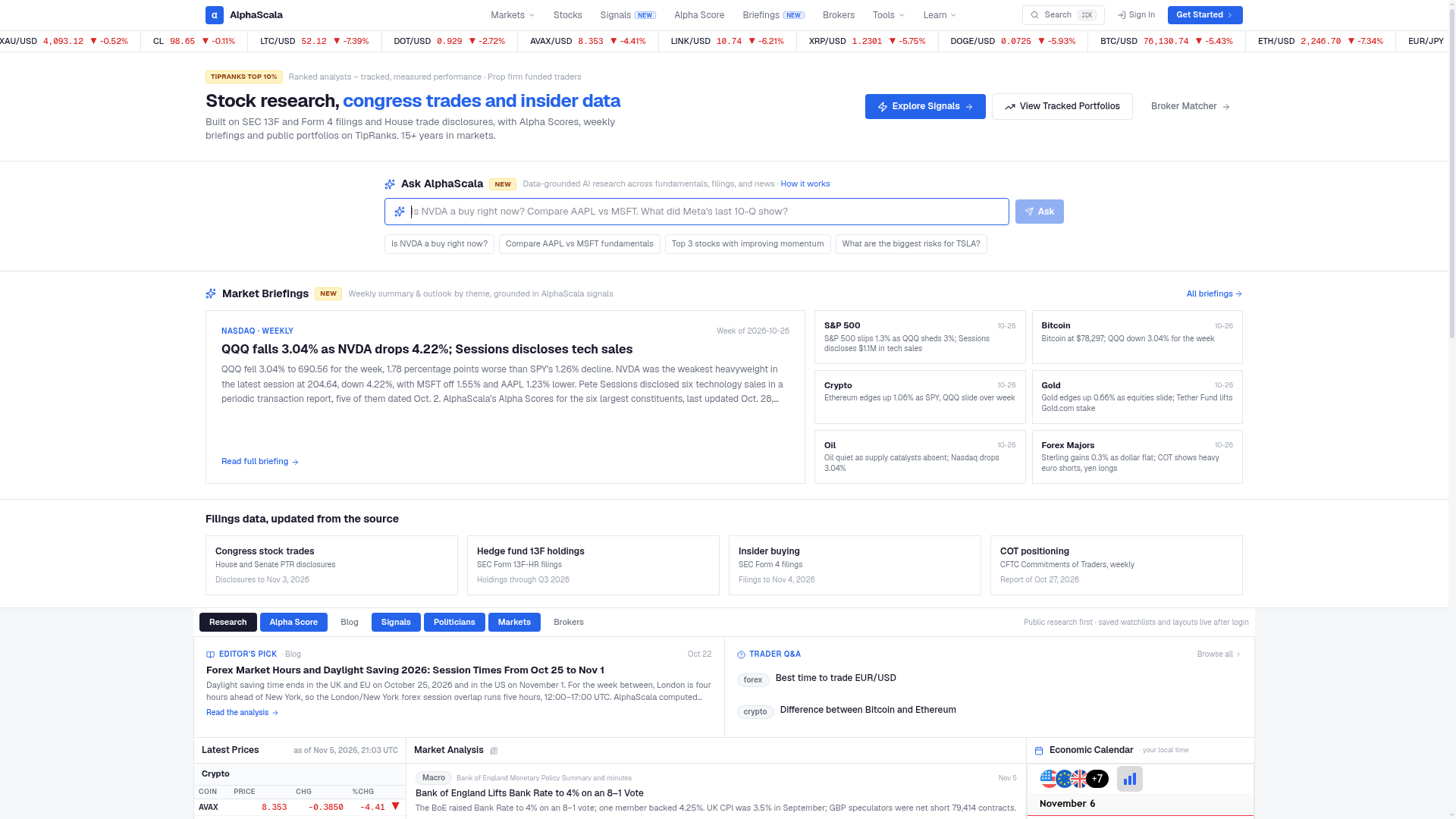
Three Dates Behind a Holding
The methodology says institutional positions come from Form 13F filings and are displayed with an as-of date. The SEC’s Form 13F guidance says required quarterly filings are generally due within forty-five days of quarter end. For the September 2026 quarter, the SEC lists November 16 as the deadline. On the November 5 review date, the quarter had ended, but that filing deadline had yet to arrive. Individual managers can file earlier.
Suppose a manager reported a holding as of September 30 and filed in early November. The first date locates the position in the portfolio; the second tells a reader when the report became public. A third date may show when alphascala.com processed the filing. None of those dates identifies the day the manager originally bought the shares. Nor does a position at quarter end prove that the same shares were still held when a reader opened the dashboard.
Congressional Amounts Are Ranges
AlphaScala says it uses periodic transaction reports from the House and Senate for political trading disclosures. Its methodology distinguishes electronic filings, which it parses by line, from scanned filings, which it links without itemising. It says transaction amounts follow the disclosed ranges. That matters when an unusually precise total appears in a social post based on a screenshot. A range cannot be converted into an exact purchase price merely by choosing the midpoint.
A count of displayed rows on alphascala.com also depends on which source records can be parsed. Fewer rows for one filer do not, by themselves, establish fewer transactions. A reader following a particular disclosure can inspect the linked original, the transaction date, filing date and range. The methodology is the publisher’s description of its process; this review did not audit every imported record.
A Price Feed and a Score Serve Different Purposes
The methodology identifies providers of quotes and daily closes and says stored prices are dated reference data. The destination is a research service. A price next to a signal is not independently verified as an executable quote at a broker. Someone comparing a published idea with their own order needs the time, instrument and market of each. A later trade can legitimately differ from a historical price even when the earlier price was accurately recorded.
The proprietary Alpha Score on alphascala.com uses a scale from zero to one hundred for US stocks. The methodology describes rolling updates, so a newly revised score and the most recent institutional filing need not contain information from the same date. Its predictive usefulness would require a different test, including timestamped signals published before the outcome, a defined comparison group, losing observations and consistent treatment of trading costs.
The Name Behind the Publication
The site identifies ROGA AI LIMITED of Gibraltar as its operator and labels its output educational. Its broker reviews use categories that include regulation, fees and platform features. The methodology says advertised minimum spreads come from brokers themselves. A published minimum summarises a provider’s offer; it is a different figure from a spread actually observed by a customer at execution. The review did not independently verify the publisher’s corporate registration or its reported portfolio performance.
If a message refers to an article on alphascala.com and requests a deposit, retain the original article and message separately. The article can establish what was published. The payment request identifies another action and possibly another party. Before attributing the approach to the publisher, obtain confirmation through an independently reached channel. The reporting guide explains how to preserve records when there is a specific financial solicitation to investigate.
Frequently Asked Questions
Can a Reader Replicate a Manager’s Latest Portfolio From the Display?
A filing can support a reconstruction as of the reporting date within its disclosure scope. alphascala.com cannot establish the manager’s current positions from that historical filing alone. Check the underlying report and its date before attempting a comparison.
Is the Score the Probability That a Stock Will Rise?
The publisher describes a proprietary rating. A score of a given size does not establish the same percentage probability of a gain. That interpretation would require a published calibration method and evidence of how the score performed against later outcomes.
Conclusion and Reporting Guidance
The useful feature of alphascala.com is that a reader can work backward from an item to the specific reporting period and the kind of disclosure behind it. The unresolved question is how well a derived signal predicts a future outcome after publication. Start with the original filing and reconcile all three dates before using a dashboard observation in a trading decision. For a disputed promotion, retain its wording separately from the research page it cites. Financial fraud reporting guide · Submit a dated promotion