
Four regulator names appear on currentcommonstudio.bond beneath an authorization heading, while the terms describe an informational website and possible third-party services. This review examines the gap between that prominent regulatory claim and the limited identification of the entity behind it. homepage Terms of use
Four Names Without a Verified Entity Match
The homepage names the CFTC, FCA, SEC and ASIC. The retrieved section does not establish which legal entity holds which permission, its reference number, the authorized activity or the relevant customer jurisdiction.
The same page describes order execution, market analysis and onboarding. Those activities can involve different providers and obligations. A reader needs to know whether the contract is for information, brokerage, portfolio management or referral to another business before assessing a claimed permission.
An exact-domain search and a search pairing the domain with regulator names did not produce a usable primary authorization record in the retrieved results. That is a failed verification within the searches performed, rather than a definitive finding that every named regulator has excluded the business.
What the Pricing Page Actually Supplies
The pricing page reached from currentcommonstudio.bond describes categories of costs such as spreads, commissions, funding, conversion and withdrawal charges. It asks readers to confirm current terms before depositing. It does not present a fee schedule for a specifically identified account provider. currentcommonstudio.bond account pricing page
This limits meaningful comparison. A zero platform fee, for example, would say little if another entity collected spreads or conversion charges. Here, even that zero-fee proposition was not established. The necessary evidence is a schedule tied to the exact contract, currency and service supplied.
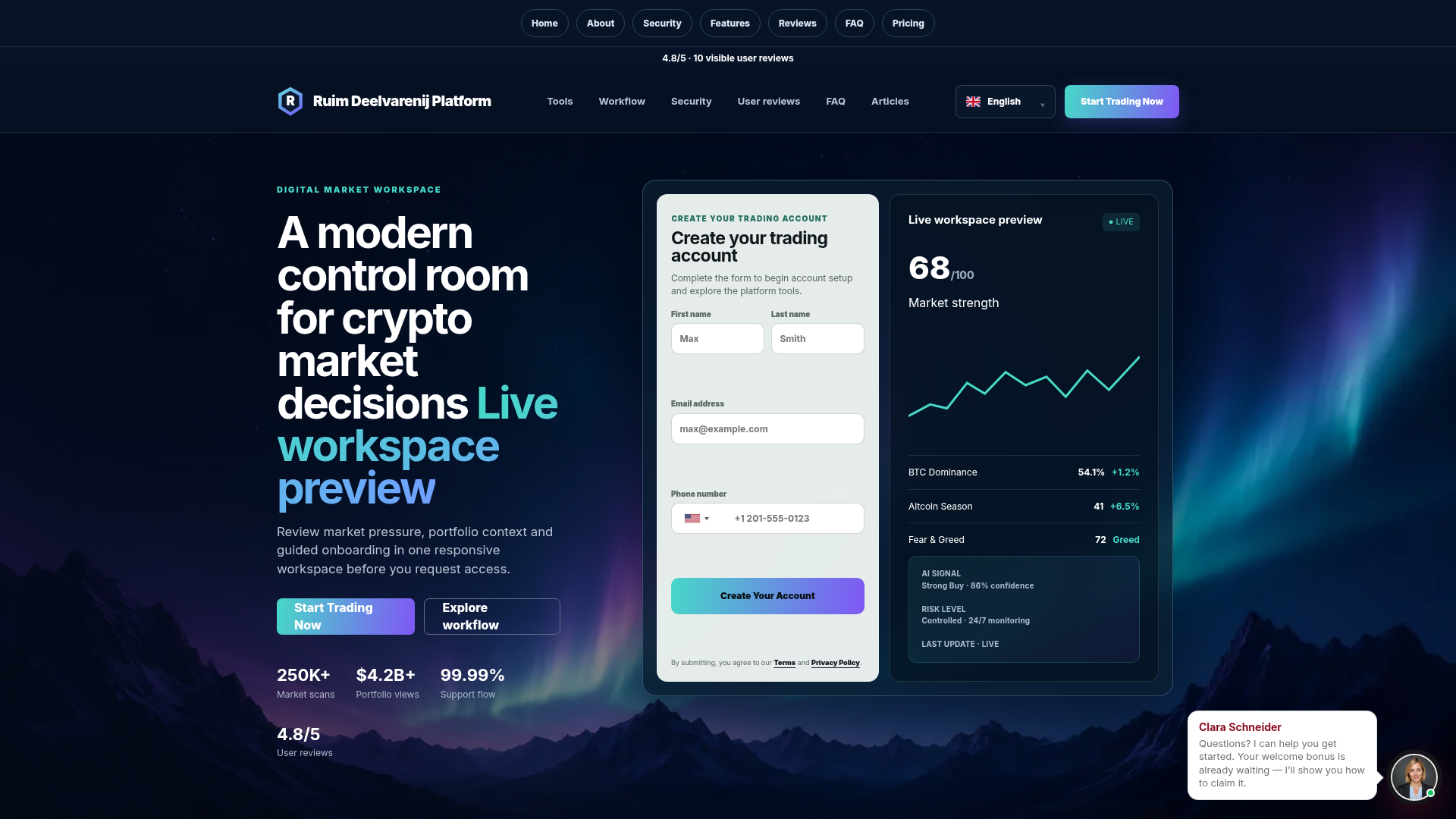
The page also repeats the account-creation form, requesting names, an email address and a telephone number. That is a visible lead-collection step. We did not submit the form and could not establish which eventual counterparty would contact a registrant or receive deposited funds.
Terms and the Brand Behind Them
The terms on currentcommonstudio.bond are dated January 1, 2026 and name Ruim Deelvarenij Platform as the website operator. They say commercial terms and counterparties are described before onboarding and allow services under third parties’ agreements. The page does not supply a company number or jurisdictional register match. Terms of use
That date is the document’s stated version date. It does not establish domain registration, the beginning of operations or continuity of management. No authoritative creation date for this exact host was established in the present review.
The homepage identifies San Francisco and London office locations, including map coordinates, and lists a US telephone number and domain email contacts. These are published contact claims. No occupancy record or verified connection between those locations and a legal account provider was obtained.
Currentcommonstudio.bond Reviews and Demonstration Metrics
Review-platform labels and large activity totals are prominent on currentcommonstudio.bond. The homepage says there are 24,817 verified user reviews and more than 250,000 verified accounts. It also displays a much smaller visible review group. Homepage review displays
Some profile buttons lead back to the contact section. They therefore do not independently authenticate the people, account balances or financial experiences displayed beside them. A testimonial and an execution result need their own provenance before either can substantiate a trading track record.
The market workspace is expressly described as a live preview, with educational qualifications elsewhere on the page. Its charts, signals and latency targets establish the presentation being marketed. They do not demonstrate customer orders filled at the displayed prices or independently measured execution speeds.
Why Counterparty Details Come First
An investor comparing analytics software with an execution service needs distinct answers about custody, fees and decision-making authority. The reviewed pages move between those concepts without supplying the complete agreements needed to identify where responsibility passes from the website to another party.
Our provider-verification guide offers relevant context for checking names and permissions. No authenticated customer loss, exact-domain enforcement order or independently confirmed impersonation is established by this investigation.
The outstanding research includes a legal entity identifier, regulator records matching the offered activities and independently sourced confirmation of the advertised offices. No message was sent to the operator, and no inference is drawn about how it would respond.
Frequently Asked Questions
Does the Page Identify Four Separate Licences?
It names four regulators beneath an authorization heading. The reviewed text does not provide four verified entity-and-permission matches, so the claim remains unresolved.
Can the Published Pricing Be Used to Calculate Total Cost?
It describes cost categories and variables, but gives no complete numerical schedule for a named counterparty. A customer would need that schedule before making a meaningful comparison.
Does a Preview Confirm Customer Trading Results?
The visible charts and figures show how the service is presented. Confirming executed performance would require attributable orders, costs, account records and an independently identifiable provider.
Conclusion and Reporting Guidance
For currentcommonstudio.bond, the central issue is the unverified link between the regulator names and the actual contracting business. Request that identity and a matching permission record before relying on the authorization heading or submitting funding instructions.
Preserve any subsequent provider introduction alongside the original landing page. If a dispute follows, the reporting resource and evidence guide can help trace the sequence from the initial promotion to the eventual recipient.