
Two different purchases can begin with a visit to energyrenthub.com. One buys access to premium information from the directory. The other involves paying a third-party address in the hope of receiving TRON network energy. Confusing the two can send a complaint to the wrong recipient. The homepage describes an address-ranking service, and its terms explain what the directory sells, how a merchant can buy placement and why the service cannot guarantee the outcome of a rental. Leaderboard and service description
What TRON Energy Does
The TRON developer documentation describes energy and bandwidth as resources an account can delegate after staking TRX. The original stake remains associated with the party that staked it, while another account can use the delegated resource. The recipient of energy does not acquire the provider’s original TRX merely because it receives capacity. A record of delegation can therefore tell a user something specific without identifying the full commercial arrangement behind it.
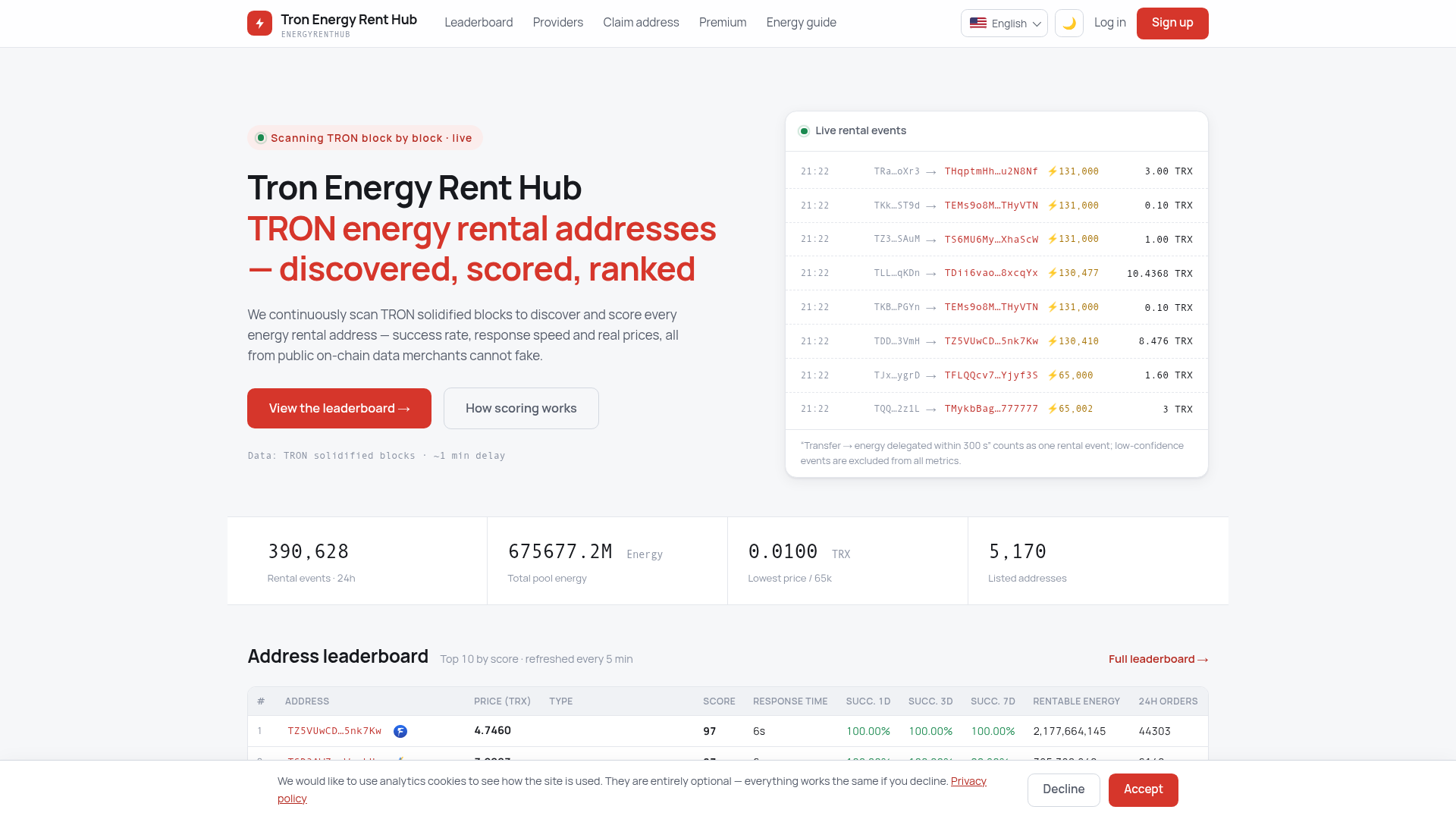
The homepage on energyrenthub.com says it scans solidified blocks to discover addresses that appear to offer energy rentals. This is an inference from observed activity. A blockchain can identify addresses, transactions and particular changes in resources. Reading that record alone cannot reveal a merchant’s legal name, whether a private support agent is authorised, or all the conditions agreed between a buyer and a seller. The terms identify the operator as an aggregator of public data.
A Ranking Is a Record of an Observation
The screen presents prices, success indicators and a leaderboard, with a description of a short delay between chain activity and display. An address with a strong history may be worth investigating, but its earlier activity cannot commit its controller to a new price or guarantee that enough energy is available for the next request. A reader comparing providers needs the measurement period, amount of energy, intended recipient and rental duration.
Timing matters if a buyer is trying to explain an unexpected network charge. A transfer of TRX to a rental address, a delegation to the correct recipient and use of the resource are separate events. If the resource arrived after the transaction for which it was needed, a rental and an additional network cost can both appear in the same history. The directory’s headline score on energyrenthub.com cannot resolve that sequence without the underlying timestamps.
The terms dated August 8, 2026 say premium membership reveals all listed addresses, including entries below the public price line. Membership is purchased by sending the exact amount of TRX shown on an order page within its validity window. The service says activation follows on-chain confirmation. It also describes valid invitations as another route to membership. These are conditions for access to the directory rather than instructions to rent energy from a provider.
If the amount is wrong, the terms on energyrenthub.com say the transfer may not match automatically. They invite users to provide a transaction hash for attempted manual reconciliation without guaranteeing recovery. Once the corresponding service is activated, membership and listing fees are described as non-refundable. A subscriber disputing access should preserve the order amount and window, the receiving platform address and the transfer record. Evidence of a third-party delegation would answer a different question.
What a Merchant Pays For
The terms say merchants can submit or claim addresses after on-chain ownership verification. They describe listing fees as buying display placement for a fixed period, subject to review and possible removal. Demonstrating control of a blockchain address can establish the ability to sign for that address. It need not establish the business identity printed on a merchant profile. Likewise, purchased visibility has a commercial meaning independent of the service’s ranking calculations.
An operator can ask to see an address profile on energyrenthub.com without sending wallet secrets. For a completed rental, keep the merchant quotation, the destination account, the promised units and the delegation transaction. For a membership issue, retain the order identifier and activation history instead. The reporting guide can help separate documents when an impersonator or payment dispute is alleged. This review made neither type of purchase and verified no individual provider’s fulfilment.
Frequently Asked Questions
Does Paying the Directory Automatically Rent Energy?
The terms on energyrenthub.com assign the premium payment to membership and fuller access to listings. A rental involves its own provider, recipient account and resource request. Confirm which address belongs to the service you intend to buy before sending TRX.
Can a Good Success Rate Authenticate a Message From Support?
A measured address history does not authenticate a private message. Compare the address in the original listing with the one in the instruction, and independently verify changes. An address can be copied into a message by someone who does not control it.
Conclusion and Reporting Guidance
The key finding on energyrenthub.com is the separation between what the directory measures, what it sells and what a rental provider must deliver. A ranking can guide a comparison, while fulfilment of a particular order requires a transaction-specific check. Before paying, identify the recipient and whether the purchase is membership or energy. Preserve the order and chain evidence for that specific service if delivery is disputed. Financial fraud reporting guide · Submit a redacted transaction record