
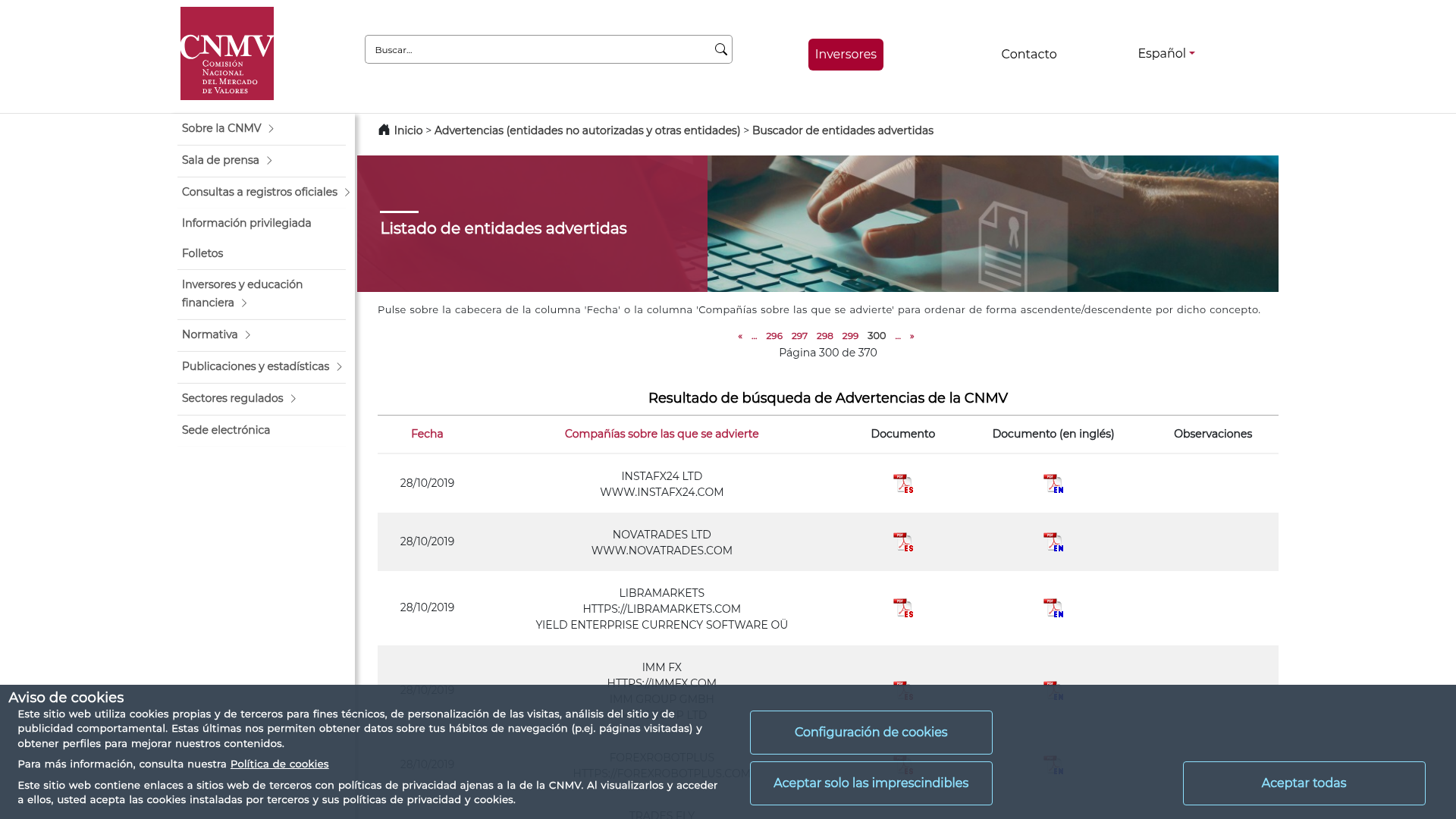
Spain’s CNMV listed es.tqrtrade.com in its June 10, 2019 warning. The commission said the listed providers lacked the registration needed to offer investment services in Spain. The row for the Spanish-language host contains no legal company name.
Reading the Spanish Warning Row by Row
The CNMV lists the host on a row by itself. A person identified against Lofer Investments and the corporate name beside Olympus Markets appear on other rows. Neither supplies the missing identity of the operator behind es.tqrtrade.com.
How es.tqrtrade.com Relates to Its Parent Domain
Verisign returned no current record for tqrtrade.com in this lookup. Parent-domain registration data would not, by itself, establish when the es subdomain began serving Spanish customers.
Missing Terms for Spanish Customers
Without the Spanish terms, it is unclear which entity would have received a deposit, how fees were disclosed or what conditions applied to a withdrawal.
Direct HTTP and HTTPS requests could not resolve es.tqrtrade.com on November 4, 2026.
What the Blank Company Field Leaves Open
Spain’s June 10 row singles out the Spanish-language host but supplies no corporate name. A contract from a particular customer could fill that gap if it ties a named counterparty to the same address. A similar brand in a neighboring row cannot do that work.
Following TQRTrade From Spain to the Italian Record
TQRTrade also appears in Italy’s June decisions. Resolution 20960 concerns that name. Resolution 20959, immediately before it, names CryptoCapitalFX. These are useful references for someone who remembers the brand but no longer has a working login. The Spanish record identifies the exact es.tqrtrade.com hostname. The Italian entry provides an independent place to look for the TQRTrade name. Cite the Spanish document when describing the commission’s registration finding in Spain and the Italian resolution when describing what CONSOB recorded.
The dates help a reader avoid a second attribution mistake. The Spanish warning is dated June 10. The Italian measures were dated June 12 and appeared in the June 17 publication. Multiple brands can therefore appear in searches covering the same week. Sorting the results by date alone will not reveal which company contracted with a particular investor. Match the spelling of the brand and the hostname first, then check whether the relevant entry actually gives a legal entity. Where the Spanish row leaves that space blank, the name of a neighbouring business adds nothing to the identification.
Reading a Spanish-Language Account Agreement
A customer file may contain three different descriptions of the business. The advertisement might use TQRTrade as its brand, the agreement might name an entity in its opening paragraph, and the transfer instruction might give a third name for the beneficiary. Transcribe each from the original document and keep its date. A regulator can use the advertisement to identify the solicitation. A bank investigating the transfer will need the beneficiary and reference. An account dispute may turn on the party that accepted the agreement.
The Spanish-language page itself is also worth identifying precisely. If a welcome email survives, retain the original link, including the hostname and any path identifying the account page. A screenshot cropped to the logo loses that information. If the only surviving item is an account statement, keep its first and last pages together so the customer name, statement period and any legal footer can be read in context. These details can make an otherwise anonymous trading-brand reference traceable without assigning responsibility to a company the CNMV never named.
Keep the original Spanish wording wherever a translation affects the identity of the parties. A translated trading name can help a reader follow the story, but a company name copied exactly from the signature page gives investigators a better search term.
Which Notice Should Accompany a Complaint?
For a complaint about a Spanish-language invitation, the June 10 CNMV entry is the closest match when the original link points to es.tqrtrade.com. Attach the individual warning where possible. The grouped publication is particularly useful when explaining why another business name seen in search results belongs to a different entry. For someone approached through an address without that prefix, retain the actual spelling. Reporting an exact match where the correspondence shows only a similar address could send an investigator looking for the wrong account records. A saved welcome email may even show which language the customer selected. Record that separately from the customer’s location, since a Spanish-language page alone cannot establish the country in which its reader actually lived when the offer first arrived.
Frequently Asked Questions
Did the Italian Measure Name the Same Host?
CONSOB recorded a separate action involving it.tqrtrade.com. The shared parent domain is relevant context, but Spain’s warning independently identifies the es host. The documents do not identify a common contracting party.
Conclusion and Reporting Guidance
The CNMV’s finding settles the historical Spanish registration question. The contracting entity and terms of any individual Spanish-language offer remain unresolved.
Keep a copy of the complete es address, any Spanish-language contract and the recipient account shown on payment instructions. The CNMV accepts reports of unregistered offers.
How to Report Financial Fraud · EU Investor Rights