
Global-exchange.ghost.io returned a Ghost site-unavailable notice on November 4, 2026. An earlier security report recorded a page on the same subdomain in March. Together the records establish that the address was observed at different times and in different states. Neither identifies an operating financial exchange, the owner of a trading account or the recipient of a customer's money.
What global-exchange.ghost.io Displayed in November
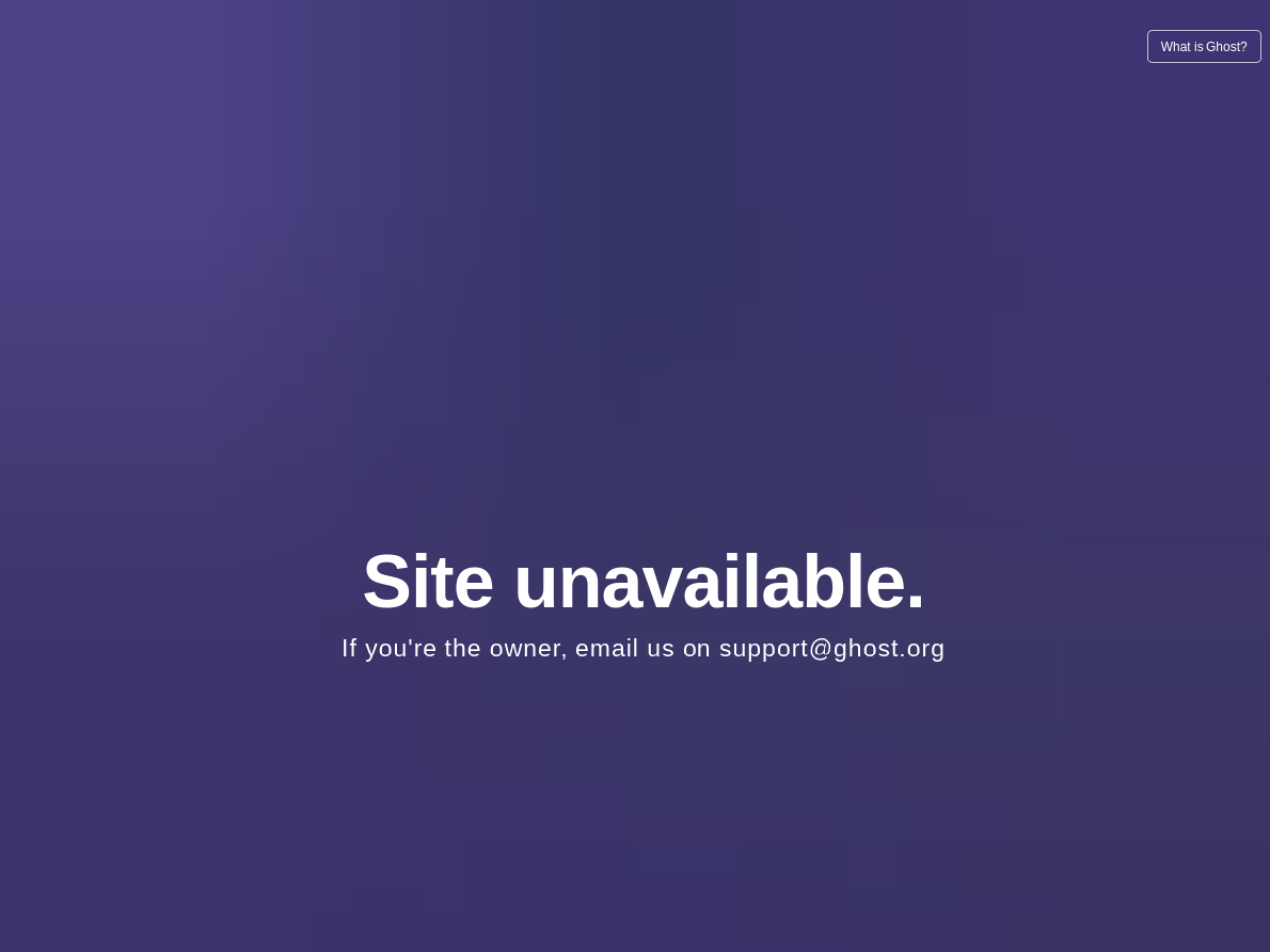
The exact HTTPS address for global-exchange.ghost.io returned HTTP 402 and a page telling the site owner to contact Ghost support. A direct HTTP request led to the same unavailable site. The screenshot shows the message as it appeared to a visitor. There was no visible trading terminal, asset list, exchange quote, account statement or instruction for making a payment.
The phrase Payment Required is the conventional label for status code 402. It is not an invoice to the visitor or proof that a customer has an unpaid debt. The page offered no amount, payment destination or customer account number. It would be particularly unsafe to interpret the response as a request to pay a fee to recover investment funds.
The standard RSS feed for global-exchange.ghost.io, sitemap, about page and robots file were checked separately. Each returned 402. None supplied an earlier article, author profile, company name or list of other pages. The checks establish what was retrievable during this visit. They do not establish when access changed or what might have appeared at a specific, unexamined path.
Public Page at global-exchange.ghost.io
What Survives From March
Gridinsoft's French-language report dates its first exact-host check to March 5, 2026. It records the page title as eq0vgim and the description as “Thoughts, stories and ideas.” That description is consistent with a publication, but says nothing about financial products. The report's listed hostnames include Ghost infrastructure and a content-delivery service.
For global-exchange.ghost.io the scanner says it detected a form or data-entry functions. It does not identify the fields as wallet credentials, a card-payment form or a trading-account application. An email subscription, an account sign-in and a payment instruction are different features. The evidence reviewed does not permit selecting one merely because the subdomain includes the word exchange.
The report displayed a trust score of 58 out of 100, referred to a security-provider warning and cited one blacklist detection. It also described uncertainty about the site. These are outputs of a commercial scanner under its own methodology. They do not establish the identity of an author, an official regulatory action or that a named customer was deceived.
March Scanner Record for global-exchange.ghost.io
The Parent Domain Cannot Date the Publication
The registry record is for ghost.io. It dates the parent domain to October 1, 2011 and lists an expiration in October 2028. The database does not register each hosted publication as a separate domain object. It therefore gives no basis for attributing fifteen years of operations to global-exchange.ghost.io.
Ghost's documentation illustrates how a publisher can point a custom domain to a subdomain ending in ghost.io. That explains how an address can identify hosting infrastructure without naming the person or organisation that wrote the content. No custom exchange domain was independently linked to this publication in the records reviewed.
For this exact host, the March observation is an independently dated historical reference. It does not give a creation date. The present 402 response provides a second time point, not an explanation. It would take a dated publication record, a platform response or an authenticated archive to narrow the period of operation or establish why the content is unavailable.
Registry Lookup for ghost.io · Ghost’s Custom-Domain Documentation
Separating the Publisher From the Host
Ghost describes itself as open-source publishing software and provides a separate abuse-reporting route for content hosted on its service. It lists impersonation, malicious content and spam among prohibited uses. A policy gives the provider grounds to review reports; it is not evidence that it enforced a particular rule against global-exchange.ghost.io.
The owner-support address printed on global-exchange.ghost.io belongs to the hosting provider. It cannot be treated as the author's customer-service address or the registered office of a purported exchange. No independently attributable company name, registration number, licence, deposit plan, withdrawal rule or published financial contract was obtained for this host.
Ghost’s Hosted-Site Abuse Policy
Frequently Asked Questions
Does the Name Prove That a Cryptocurrency Exchange Operated Here?
No. It is a publishing subdomain with a descriptive label. A verifiable trading offer would need identifiable terms, instruments or a route for customers to transact. Neither the current screen nor the recorded March metadata provides those details. Searching a corporate register for the generic words Global Exchange would risk assigning an unrelated business to the page.
What If an Old Link Led to Another Website?
For a link to global-exchange.ghost.io, keep the full original path, its path and the final destination recorded by the browser. A post can contain an outbound link without operating the service at the destination. Evidence showing where the page sent the visitor, which party asked for payment and who received it is necessary to reconstruct that sequence.
Conclusion and Reporting Guidance
The exact host was unavailable on the check date, and the March record is too limited to identify a financial operator. This review remains on research hold. The observed HTTP status, commercial security assessment and age of the hosting domain do not justify assigning a financial risk score or alleging a withdrawal refusal.
If reporting suspected impersonation or harmful content, use Ghost's published abuse channel with the exact URL and dated evidence. If a separate party received funds, report the beneficiary and transaction to the payment provider as a distinct event. Preserve the original communication rather than relying on the current unavailability notice to explain the loss.