
The headline on global-ledgr.ghost.io called the article an official setup guide for Trezor wallets. The address in the browser belonged to a Ghost publication called “global ledgr.” That difference is visible in a March 26, 2026 urlscan record. A fresh check on November 5 reached Ghost’s unavailable-site notice instead. The archived page helps answer what visitors were told about device setup. It offers much less evidence about who published the instructions or what happened to any individual wallet. March scan
Two Dates on the Archived Guide
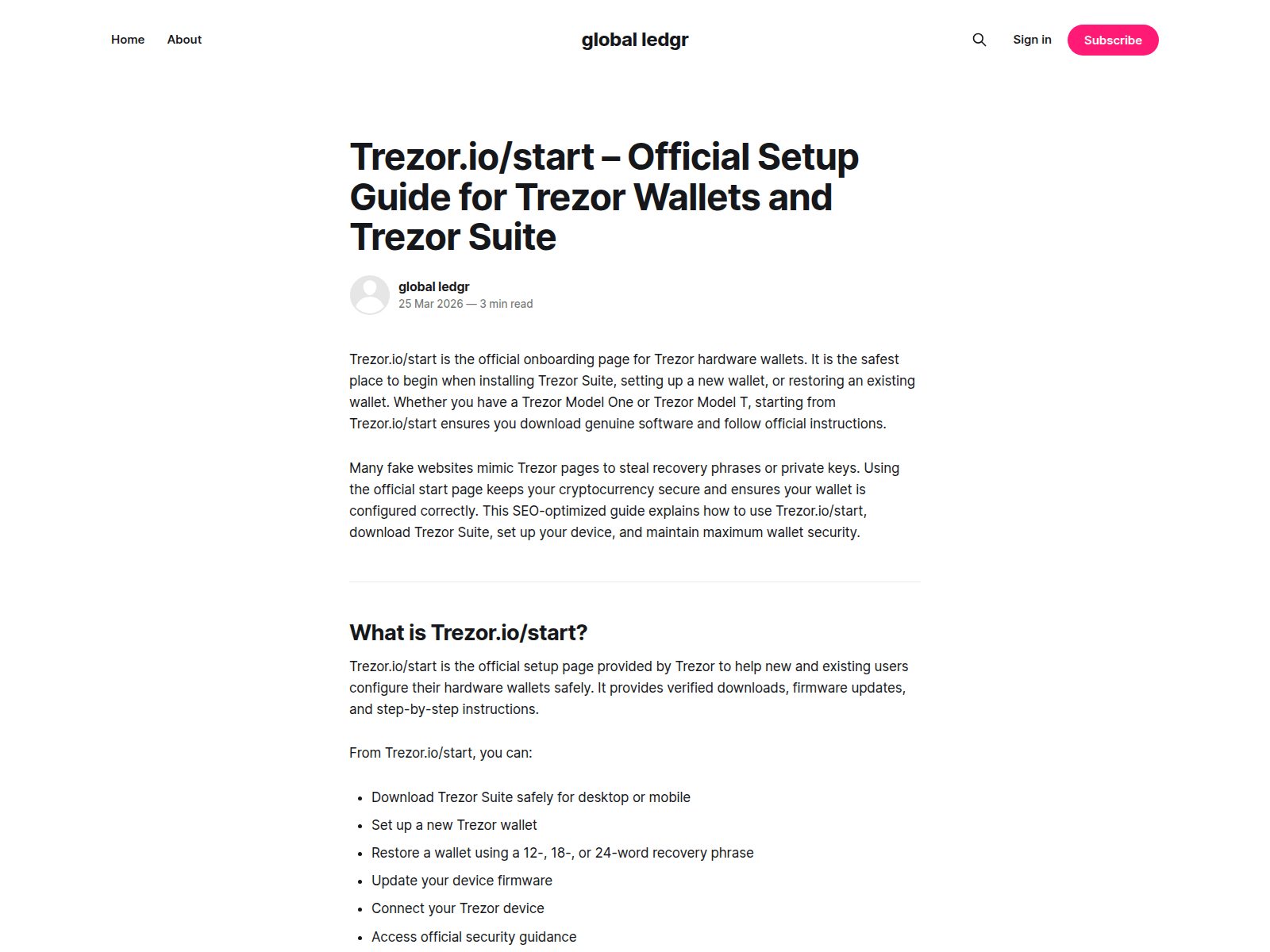
The screenshot shows a byline of “global ledgr” and a displayed publication date of March 25, 2026. The following day, a browser scanning from France loaded the article at the path ending in /trezor-start/. March 25 is the date the publisher put on the page. March 26 is the date an outside service documented the page at that address. Neither establishes when the Ghost account was opened.
The text discussed installing Trezor Suite, setting up a device and restoring a wallet. It even warned readers about sites that steal recovery phrases. Advice that resembles a manufacturer’s own guidance can make a page feel familiar. The operational question is who controls the address a reader will use for the next step. Trezor supplies a setup route on its own domain. A headline printed by another publisher cannot establish the same authority. Trezor’s device setup page
What the Browser Recorded in the Form
The archived form analysis for global-ledgr.ghost.io records a footer subscription form with an email field and a Subscribe control. That fits the publication layout in the screenshot, which also shows a subscription button in the upper right. The form inventory did not identify a recovery-word field. A sentence about restoring a wallet is different evidence from an input box that asks a visitor to type a backup.
For someone reconstructing an encounter, the distinction determines which records are relevant. An email subscription might be followed by a confirmation message. Preserve its sender, timestamp and destination links. A later request to enter wallet words would need to be documented on its own terms, including the hostname where it appeared. The March browser capture did not follow a particular subscriber’s inbox or record a later transaction.
Why the Submission Tag Matters
The public scan of global-ledgr.ghost.io carries a PhishDestroy submission tag. Its displayed classification reads “No classification.” A security service can submit a page for examination, and the resulting record can preserve the page without issuing a verdict. Treating the submitter’s suspicions as a separate finding by the scanning service would give readers a misleading impression of independent corroboration.
The earlier review cited a PhishDestroy abuse record. That record could not be independently retrieved during this revision. The dated screenshot and form inventory provide a firmer basis for describing the page than a secondhand account of a malicious verdict. Neither source identifies an individual behind the publication. The hosting network that delivered the page and a certificate covering a shared domain do not resolve authorship.
What Changed by November
On November 5, separate retrievals of global-ledgr.ghost.io and the historical article path each displayed a message that the site was unavailable. Ghost directed the owner to its support address. This establishes what those requests returned on that date. The notice gives no reason for the change, names no enforcement authority and supplies no evidence that a security report caused the page to disappear.
A visitor with a more recent setup invitation should compare the full address in that message with the archived path. Even a small change in the hostname can lead to a different operator. Preserve the original link as text rather than reopening it to make a report. A copy of the invitation can establish what the sender asked the recipient to do when the old page itself is no longer accessible.
A dated browser-history entry for global-ledgr.ghost.io can help establish the sequence. Keep the full historical path and the next destination visible, especially when a message uses different wording for its link.
Frequently Asked Questions
Did Trezor or Ledger Publish the Article?
No verified publisher record connected either company to global-ledgr.ghost.io. The byline identifies a publication name, and the article discusses Trezor products. Other titles in the archived text refer to Ledger Live. Those brand references establish the subject matter, while the manufacturer’s own website provides the independent route for locating official setup instructions.
Does Visiting the Guide Establish Wallet Access?
A page load records a browser visit. It does not establish disclosure of a secret or approval of a transfer. If backup words were shared elsewhere, follow Trezor’s phishing guidance through its own site. Exclude the words themselves from screenshots, support messages and editorial submissions.
Conclusion and Reporting Guidance
The strongest finding about global-ledgr.ghost.io is the gap between the official-sounding title and the unverified Ghost byline. The historical record identifies an email subscription form, while the November check establishes that the article was unavailable. The operator and any customer loss remain unresolved. Anyone reporting a later approach can pair the original invitation with a dated, redacted image of the next step. Financial fraud reporting guide · Submit evidence to InvestorWatchdog