
A visitor to metaguard.ink is promised control over a digital wallet, yet the same homepage says that withdrawals pass through a managed approval process. The tension is worth examining before focusing on the prominently advertised swap price. A customer who can request a transaction, an employee who can approve it and the party controlling the signing keys may be three different people. The public site describes several roles without establishing who ultimately has custody. Wallet features and account roles
Three Roles Behind a Single Sign-In
Following the public withdrawal link leads to a sign-in page for access to a wallet, agent portal or administration panel. The capture establishes the existence of that access screen. It does not expose an authenticated withdrawal form or reveal the permissions assigned to any actual user. No password was entered, no wallet was connected and no withdrawal was attempted during the review.
The explanation on metaguard.ink says a personal agent can fund an account and track transactions, subject to permissions set by a compliance team. An agent’s ability to adjust an account balance is different from a customer having received cryptocurrency at an address under their control. A customer investigating a credit should ask whether it reflects an external transfer, an internal adjustment or a promotional entry. The evidence needed for each is different.
A Flat Swap Fee With a Separate Settlement Question
The advertised exchange fee on metaguard.ink is 0.10 percent. Applied to a swap with a fee base of $1,000, that percentage would equal $1. The arithmetic does not reveal the exchange rate used, whether an additional price spread applies, which asset pays the fee or how much a subsequent transfer to an external wallet costs. To compare quotations, keep the input asset, quantity, time, output quantity and fee currency together.
The site says swap settlement is immediate and reflected in the user’s balance. That describes a change visible inside the service. External settlement would require evidence of a transfer onto the relevant blockchain or a credit with an independent receiving institution. A customer who can swap within the interface might still need approval to withdraw the output. The homepage’s own description gives a reason to examine those two operations separately.
How to Read the Wallet Illustration
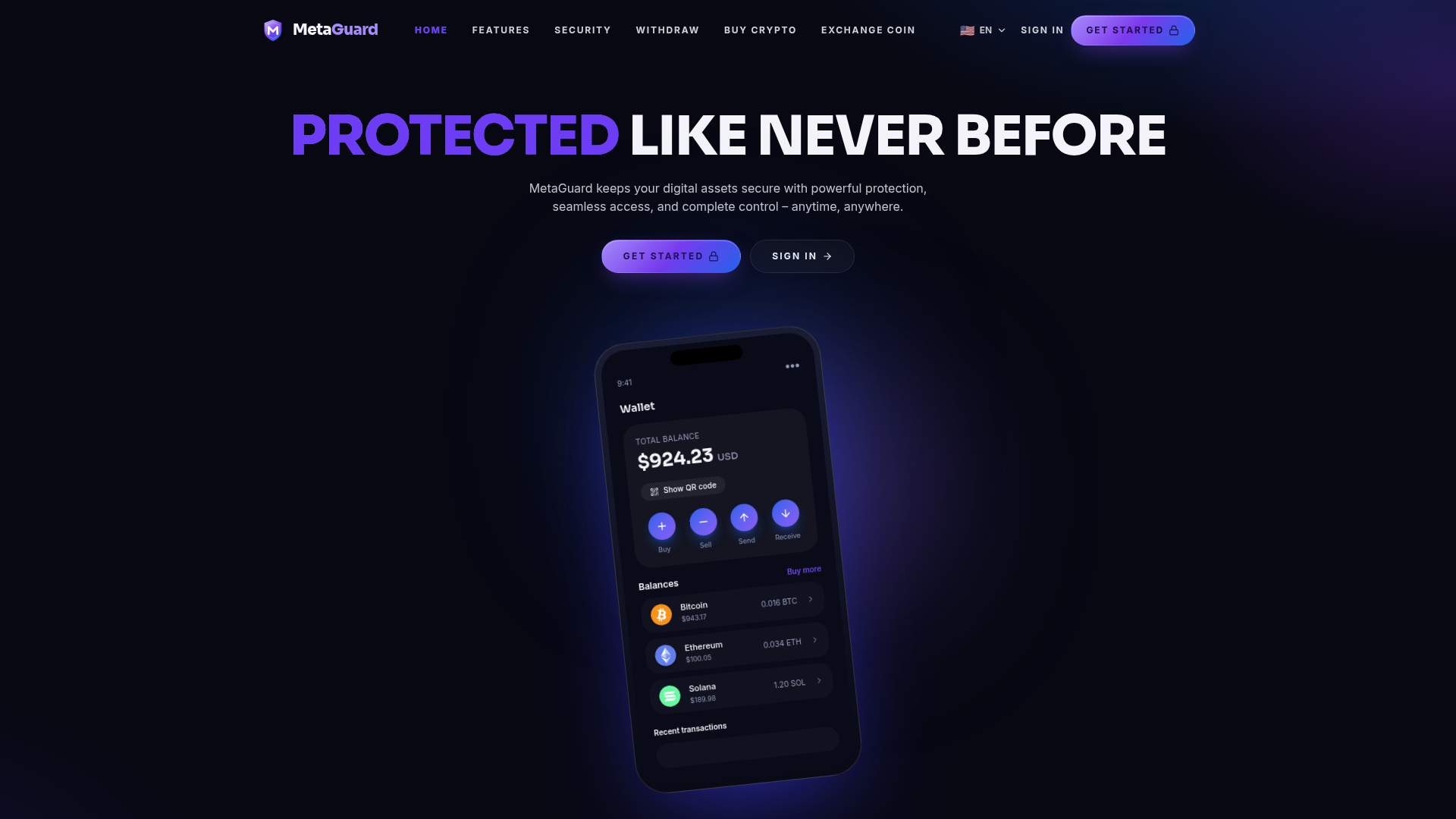
The phone graphic on metaguard.ink presents a dollar balance and several assets. Other panels show a portfolio value, a spending figure and a staking reward. They illustrate different features and should not be joined into a single customer statement. No specific individual, account period or independent asset record accompanies the graphics. Treating them as proof of reserves would give design examples a meaning they cannot support.
The page also describes an immutable ledger recording deposits, withdrawals and adjustments. To evaluate a particular transaction, ask which ledger is meant and whether a customer can check it without relying on the same administrator who entered the adjustment. An internal log can help reconstruct a decision even if it has no public transaction hash. A blockchain confirmation can establish movement between addresses while leaving the legal identity of their controllers unresolved.
A Dated Security Assessment
The domain record gives September 17, 2026 as the registration date. Gridinsoft published a suspicious-site assessment dated October 30, 2026. It is a vendor assessment of metaguard.ink, not a regulator decision or documentation of a particular loss. Registration dates identify a domain event; they do not establish when the advertised business began, who owns the wallet infrastructure or whether a specific customer was able to recover assets.
The homepage identifies the brand as MetaGuard Digital Custody. This review did not independently establish the contracting legal entity, named custodian or applicable financial permission. Before funding, a reader can request the custody agreement, who approves withdrawals and what happens if an agent is unavailable. A reply should identify who can sign and how to appeal an approval decision. Language about security monitoring alone cannot answer either question.
Keep any transaction reference alongside the operator’s acknowledgement so a reviewer can compare the two without accessing your account.
Frequently Asked Questions
Does Two-Factor Sign-In Prove Self-Custody?
Two-factor authentication concerns account access. Holding a signing key concerns authority to move a cryptoasset. The public materials on metaguard.ink describe approval and administration, but they do not establish that the customer alone controls a key. Never share a recovery phrase to demonstrate ownership to a reviewer.
Which Evidence Would Explain a Pending Withdrawal?
Keep the request identifier, asset, network, receiving address, submission time and approval history. If the service says the transfer was broadcast, ask for the transaction identifier and compare it with the receiving wallet. The evidence guide explains how to retain records without exposing login credentials.
Conclusion and Reporting Guidance
The fee advertised on metaguard.ink is easy to calculate; the authority behind the withdrawal is harder to establish. The login and role descriptions support the finding that customers enter a managed process. They do not establish key ownership or successful external settlement. Before relying on an internal balance, obtain the custody terms and the identity of the party responsible for approval. Document any disputed request separately from earlier swaps. Financial fraud reporting guide · Submit a redacted withdrawal record