
An email address, a password and a confirmation box are the first things a visitor sees when creating a wallet through primetrustsassets.com. Those fields matter because the homepage describes the service as a self-custody platform and says it does not track personal information, including IP addresses. A login can coexist with a wallet controlled by its owner. The missing detail is which actions the website can perform with that login and which require a cryptographic key held exclusively by the customer. Wallet registration form
Where the Agreement Link Leads
The signup form labels its submission as acceptance of terms and a privacy policy. In the retrieved page the Terms of Service link resolves to the registration page with a fragment marker, rather than identifying a separate agreement. The captured form did not supply a legal company name, governing jurisdiction or schedule of wallet charges. No email was submitted to see whether more detailed terms appear after registration.
That leaves a prospective customer with an important distinction to make. If an email address is used only to create a profile, the agreement should explain whether losing access to that profile affects the ability to move assets. If the provider can recover a wallet using an account login, the recovery procedure matters as much as an advertised security feature. The form on primetrustsassets.com does not establish either design.
Reading the Wallet Claims Against the Transfer Instructions
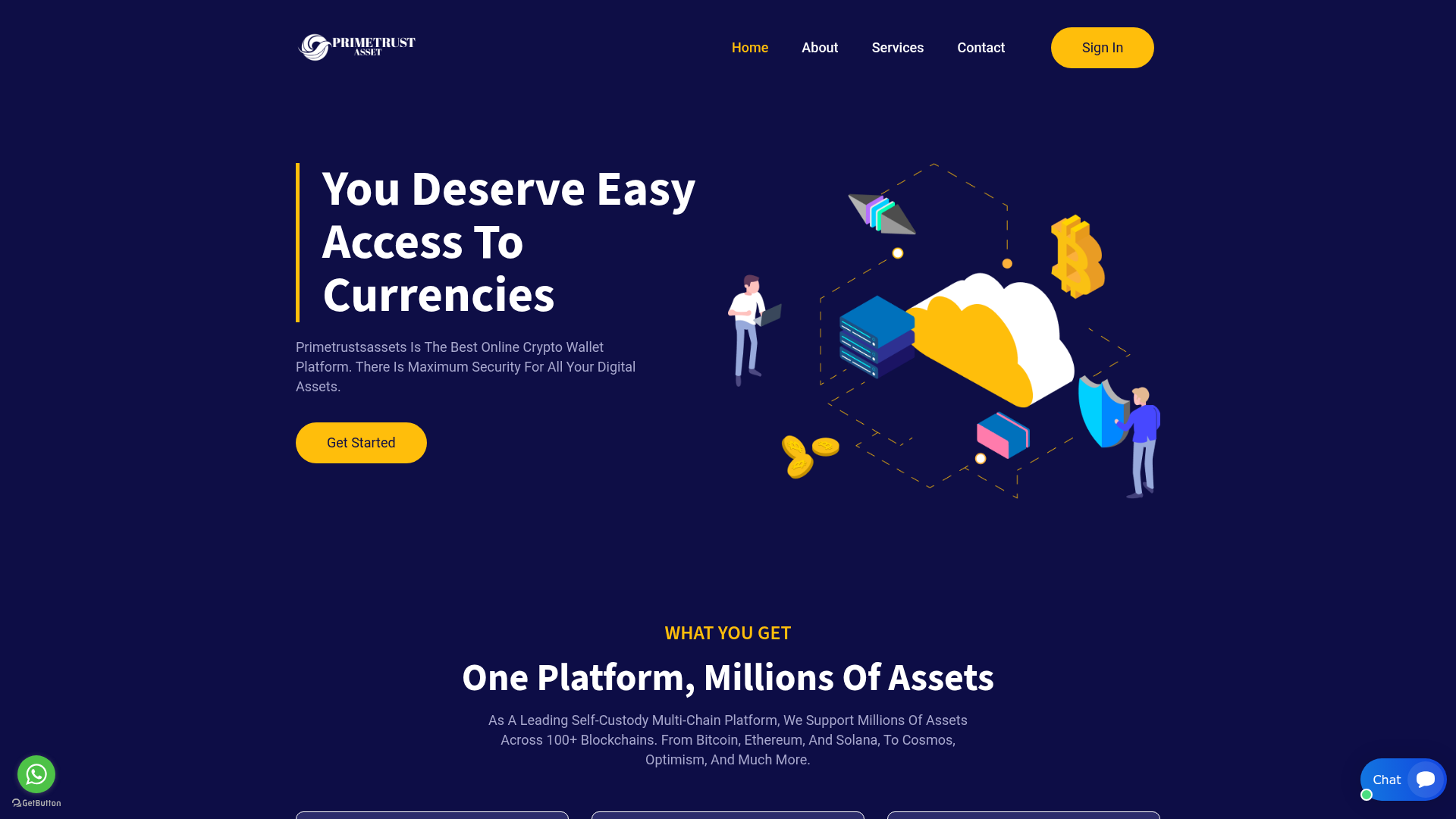
The homepage promotes support for millions of assets across more than one hundred blockchains. It describes receiving cryptocurrency at a wallet address and sending funds after specifying a recipient and amount. It also advertises portfolio tracking, alerts and access to market data. These functions range from displaying public information to authorising a transfer. A screenshot of prices can document the first function without demonstrating the second.
The page claims its algorithms ensure that every transaction succeeds without loss or breach. A reader evaluating that statement needs to know what the operator considers successful. A network could confirm a transaction sent to an unintended address. The ledger entry would document delivery even though the sender suffered a loss. The wording on primetrustsassets.com does not explain how the operator would reverse such a transaction or compensate a user.
Three Dates With Different Owners
The business presentation says it has delivered digital-asset services since 2017. The homepage footer carries a 2025 copyright line, while the registration form has a 2026 footer. Verisign places the registration of primetrustsassets.com on October 15, 2026. Those dates concern different records. A business could predate a web address, and a footer can outlive a design change. The registry date alone neither corroborates the operating history nor establishes that the business invented it. Registry record
An earlier company extract, dated contract or archived site linking the same legal entity to the service would help establish continuity. “Primetrustsassets” in the homepage footer and the slightly different spelling on the registration page are trading labels in this evidence. A similar business name in a directory, without a company identifier and matching website, would be a weak basis for attributing responsibility.
What a Plan Comparison Would Need
The FAQ on primetrustsassets.com refers to basic and premium options and suggests considering fees and security when choosing a tier. The captured answer supplies no tariff showing the difference. For someone assessing a quoted transaction charge, obtain the network, amount to be sent, amount expected at the destination and any separately disclosed platform fee. A news feed or a change in an asset price is a poor substitute for those figures.
The website also links to WhatsApp support. A support number alone cannot establish the location of a legal counterparty. If an agent supplies a deposit address, preserve the instruction together with the account page that displayed the address. A difference between the two deserves clarification before a payment, particularly where the user expects to control the wallet personally. How to document a payment instruction
A dated copy of the agreement matters if a wallet later changes its recovery process. The reporting guide explains how to organize supporting evidence while keeping the credentials that control the wallet private.
Frequently Asked Questions
Does the Signup Screen Prove Self-Custody?
The screen establishes which account details the site requests. The material reviewed did not establish where the signing key is generated, whether the customer can export it, or whether the operator retains access. Those details determine what the custody claim means in practice.
Does the Registration Date Establish a Licence?
The registry identifies the registration of primetrustsassets.com. It supplies no financial permission for the services described. The reviewed material did not establish a licensed legal entity or a regulator-confirmed relationship between this website and a named wallet provider.
Conclusion and Reporting Guidance
The gap on primetrustsassets.com is contractual as well as technical. Visitors are invited to agree and create an account before the reviewed form identifies the counterparty or explains control of the keys. An investor considering the service can ask for the actual terms, recovery procedure and complete fee schedule. A reader reporting an existing account can provide a redacted agreement or transaction identifier. Never include a password, private key or recovery phrase. Submit supporting evidence