
A wallet download button should help a reader answer a simple question: who published the software? On sfglobal.online the button labeled for a Safe Global wallet pointed back to a fragment on the same page. At the same time, the source contained an image filename referring to SafePal. Comparing the page with SafePal’s own site reveals a branding discrepancy worth resolving before trusting any installer.
The Wallet Promoted Under the Safe Global Name
The reviewed homepage introduces Safe Global as a decentralized smart-contract ecosystem. It describes a wallet that can connect to decentralized applications, trade collectibles and participate in liquidity mining. The page promises a familiar set of controls across mobile devices and browser extensions. These are the site’s descriptions of the intended product.
It also states that private keys never leave a noncustodial wallet. That is a claim about the behavior of software. Establishing it would require identifying the actual application, verifying its publisher and examining its key handling. A statement on a marketing page cannot establish which permissions an installed extension would request.
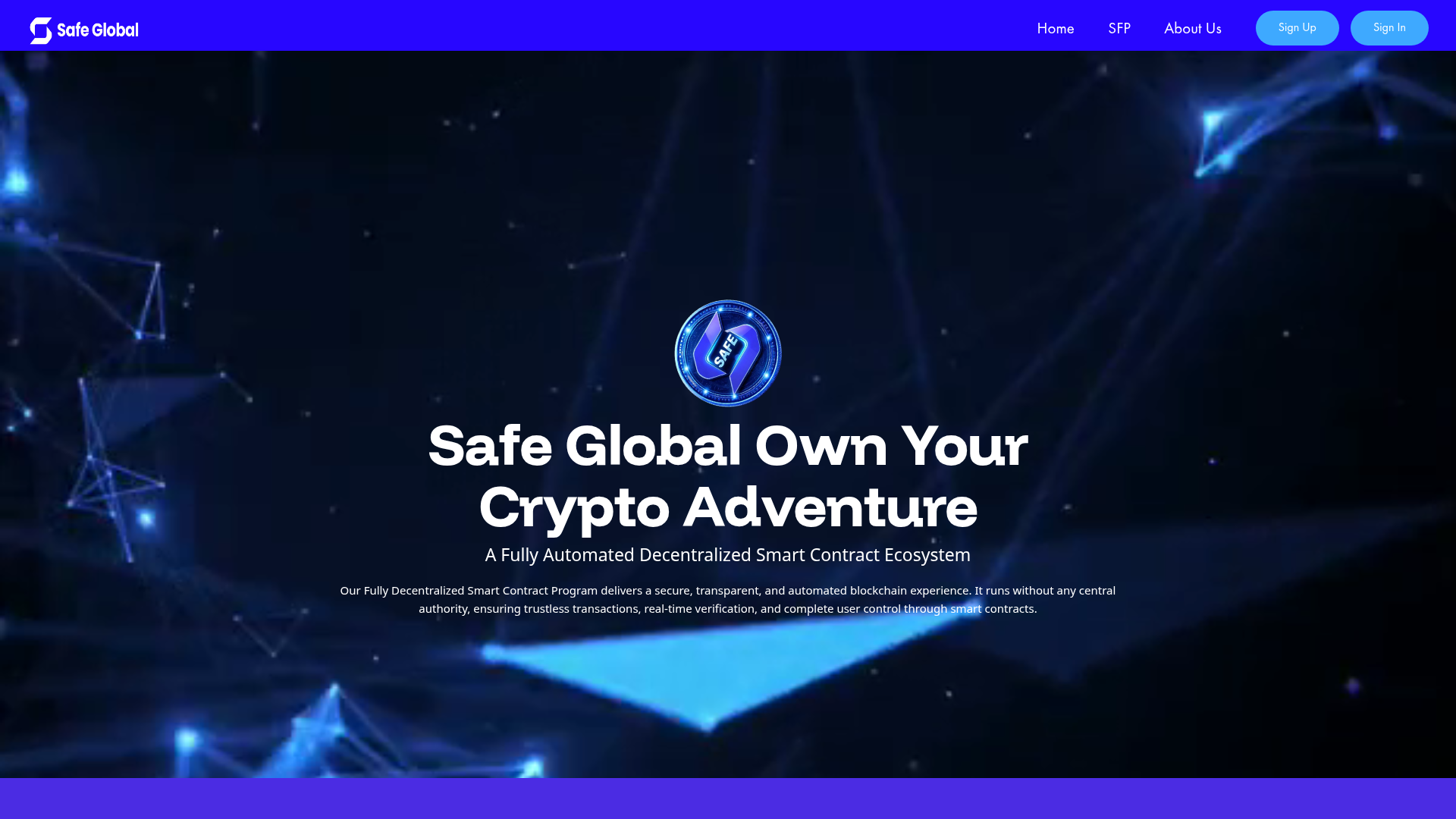
The screenshot of sfglobal.online shows the Safe Global name above a blue network illustration. The image establishes the public presentation on November 5. It does not show an installed wallet, the contents of a recovery screen or a signed transaction. Our review involved no installation or connection of a wallet.
Comparing Three Attributions With the Source
The page attributes a statement about incubation in the first Binance Labs program to He Yi. Its text presents Safe Global as the company being discussed. The SafePal homepage carries closely matching language about incubation and resilience, but identifies SafePal as the subject. That is a material difference in the company name attached to the comments.
The reviewed page also presents a media endorsement labeled Forbes and another statement attributed to Eric Chen. SafePal uses those names on its own site too. The overlap helps explain why the quotations could appear familiar to a reader. It does not establish that any of those parties made a separate endorsement of sfglobal.online.
There are mismatches within the reviewed page itself. Next to text labeled Forbes, the image reference includes the name CryptoFiend. The image associated with Eric Chen includes Hashoshi in its filename. Filenames can survive redesigns and do not authenticate a person’s identity. Here they are corroborating clues that the displayed labels deserve a source check.
Following the Download Reference
Near the download area, the inspected markup at sfglobal.online referenced an asset named safePal-extension-icon.svg. SafePal’s genuine site also uses a similarly named asset in its own wallet presentation on its own public website. Naming overlap alone would be weak evidence of a corporate relationship. Read together with the altered testimonial subject, it raises a concrete question about the provenance of the page material.
The extracted destination behind the Safe Global download label was a same-page fragment. We did not obtain a publisher-verified App Store, Google Play or browser store listing from that link. A fragment can be used with a script, so this observation does not settle what every browser interaction might do. It describes the link target available for inspection.
The distinction matters if a separate message arrives offering what appears to be the missing download. An installer delivered by direct message is a different artifact from a homepage link. Verifying one would require the actual distribution address, publisher identity and application listing. A copy of the same logo in both places does not connect them reliably.
What the Domain Record Can Contribute
The registry record dates sfglobal.online to September 12, 2026. It reports restrictions on renewal, update, deletion and transfer. Those are domain administration statuses. They give no information about a user’s authority to approve a token transaction or recover keys. We could not establish from them who wrote the page or supplied its imagery.
A Gridinsoft assessment published October 30 gave the site a low score and reported that social references did not resolve to recognizable profiles in its checks. An automated assessment cannot establish ownership of the brand or authorship of a testimonial. The comparison with the actual publisher page provides a more direct basis for the specific discrepancy described here.
Frequently Asked Questions
Did the Page Ask for a Recovery Phrase?
We did not observe such a request in the public homepage material. The review did not test hidden flows or software obtained from another source. A claim that this site collected a phrase from a particular visitor would need evidence from that interaction.
Can the Names Safe Global and SafePal Be Treated as Interchangeable?
The page at sfglobal.online uses one name while its asset labels and endorsement language point toward material visible under the other. We found no verified agreement explaining an affiliation. A source comparison supports identifying that discrepancy without attributing the reviewed site to SafePal.
Conclusion and Reporting Guidance
The strongest evidence is the changed company name in recognizable wallet promotion material and the absence of a verified store destination behind the inspected download label. Who controls the site and any separately distributed software remains unresolved. Preserve a suspected installer link and its sender without sharing keys. InvestorWatchdog’s methodology and reporting guide explain how to document this distinction.