
The swap screen at wagyu.xyz gives a visitor two decisions before an order can proceed: which asset to deposit and where the proceeds should go. Its public material promotes Monero swaps, yet our screenshot shows USDC in the receive field. The site’s description addresses a range of transactions, while the captured homepage form records one initial configuration.
What the Swap Interface Actually Shows
In the homepage capture, a token selector sits beneath the deposit label. The receive area shows USDC alongside an Arbitrum network symbol, and a separate field requests a recipient address. A neighboring panel displays recent transactions. We did not select a token, connect a wallet, sign a message or send funds to the site.
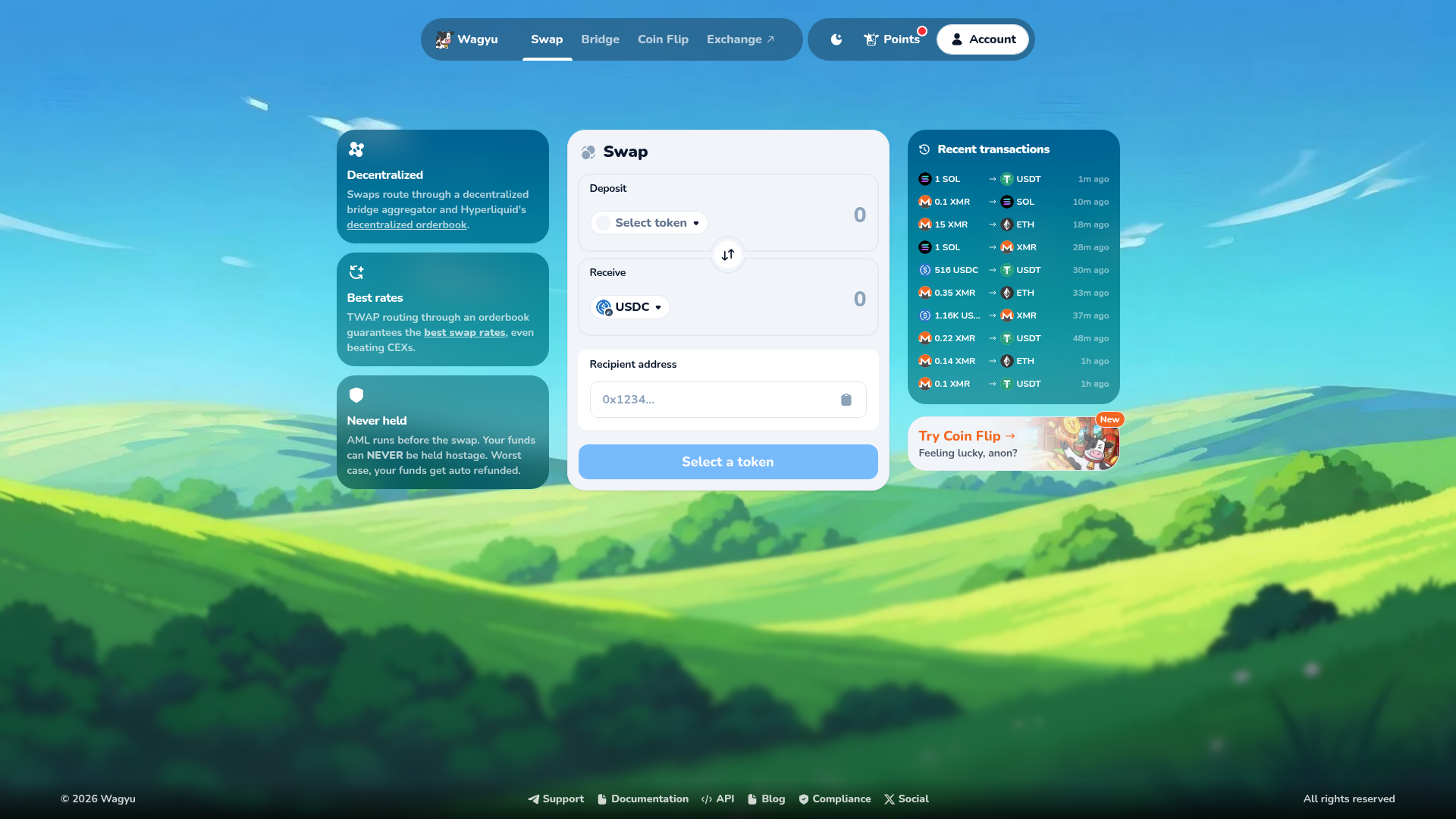
The page text says customers can send assets including Bitcoin, Ethereum, Solana or stablecoins and receive Monero at their own address. It describes selecting source and destination networks in the interface. This is the operator’s account of its service. A completed exchange would require additional evidence linking an incoming transfer, the agreed quote and an outgoing payment.
The homepage of wagyu.xyz says each order has a private session key for tracking progress and, where necessary, supplying a refund address. A screenshot of an order can document its stated terms without making a private key available to someone who offers to investigate it.
When a Refund Can Be Reviewed Again
Wagyu’s compliance policy addresses restrictions, blacklisting and possible seizure of user assets. The homepage says screening occurs before execution and may recur during recovery or refund. A failed check normally begins a refund process that can require an address and further screening. It does not give every deposit an unconditional right to immediate repayment.
The policy says Wagyu modeled its approach on practices it attributes to Circle and describes a binding court order as the threshold for freezing or seizing assets in response to outside requests. A comparison with another company’s practices is a statement about policy design. It does not establish that Circle runs the exchange, insures orders or adjudicates individual refunds.
There is also a difference between screening a proposed transaction and refusing to return an existing deposit. The public documents describe what Wagyu says it may do in those situations. We did not verify the treatment of a particular customer. A dated order history and the precise explanation given to that customer would be necessary to assess a dispute.
Weighing the Arbitrum Impersonation Label
A PhishDestroy report labels wagyu.xyz an Arbitrum impersonation risk. The reviewed report displays five VirusTotal detections among 92 engines and identifies Arbitrum as an automated brand label. Its narrative dates detection to September 6, 2026, while its summary records September 7 as first observed. The source presents both dates.
The report warrants attention before a wallet interaction. Its classification also needs careful attribution. An Arbitrum symbol genuinely appears as a network indicator in the retrieved interface. That observation alone cannot resolve whether the operator claimed to represent Arbitrum. Likewise, the recorded detections do not show what happened to any particular deposit.
The registry response places registration of wagyu.xyz on April 27, 2022. That is several years before the security report’s observations. The dates describe different events. The registry cannot establish when this interface first appeared, whether ownership changed in the intervening years, or whether the service delivered orders during that period.
Orderbook Claims and Customer Evidence
Wagyu says it uses a decentralized orderbook for XMR trades and can spread large orders over time. To assess an individual fill, a reader would need the quoted amount, the time and network, the final amount received, and an explanation of fees or changes during execution.
A public list marked recent transactions may appear reassuring, but matching an entry to a specific individual customer order takes more than comparing token names. Network and amount both matter, and an entry must be traced to the relevant transaction. We could not independently establish a fill rate, refund rate or audited record of performance for wagyu.xyz.
Frequently Asked Questions
Does the Public Policy Identify Who Holds My Deposit?
It uses the Wagyu name and describes controls over assets. The material reviewed did not establish the incorporated counterparty, its registration number or a verified dispute address. We made no contact with a purported operator and have no operator response to the third-party classification.
Does the Security Report Document a Specific Loss?
The reported detections and narrative concern the domain. We did not authenticate a customer statement linked to both a deposit and a missing payout. The report is security evidence about the address, while a financial loss would require a separately documented sequence of events.
Conclusion and Reporting Guidance
For wagyu.xyz the unresolved issue is who controls funds between deposit, screening and settlement. A published refund process offers a description of that interval; the exact-domain phishing report adds a reason for caution. We leave individual performance and responsibility for any loss on research hold.
For an existing dispute, preserve the quote, timestamps, public transaction identifiers and correspondence while keeping private session credentials out of submissions. The reporting guide explains evidence preservation. A redacted order chronology can be shared through the tip form.