
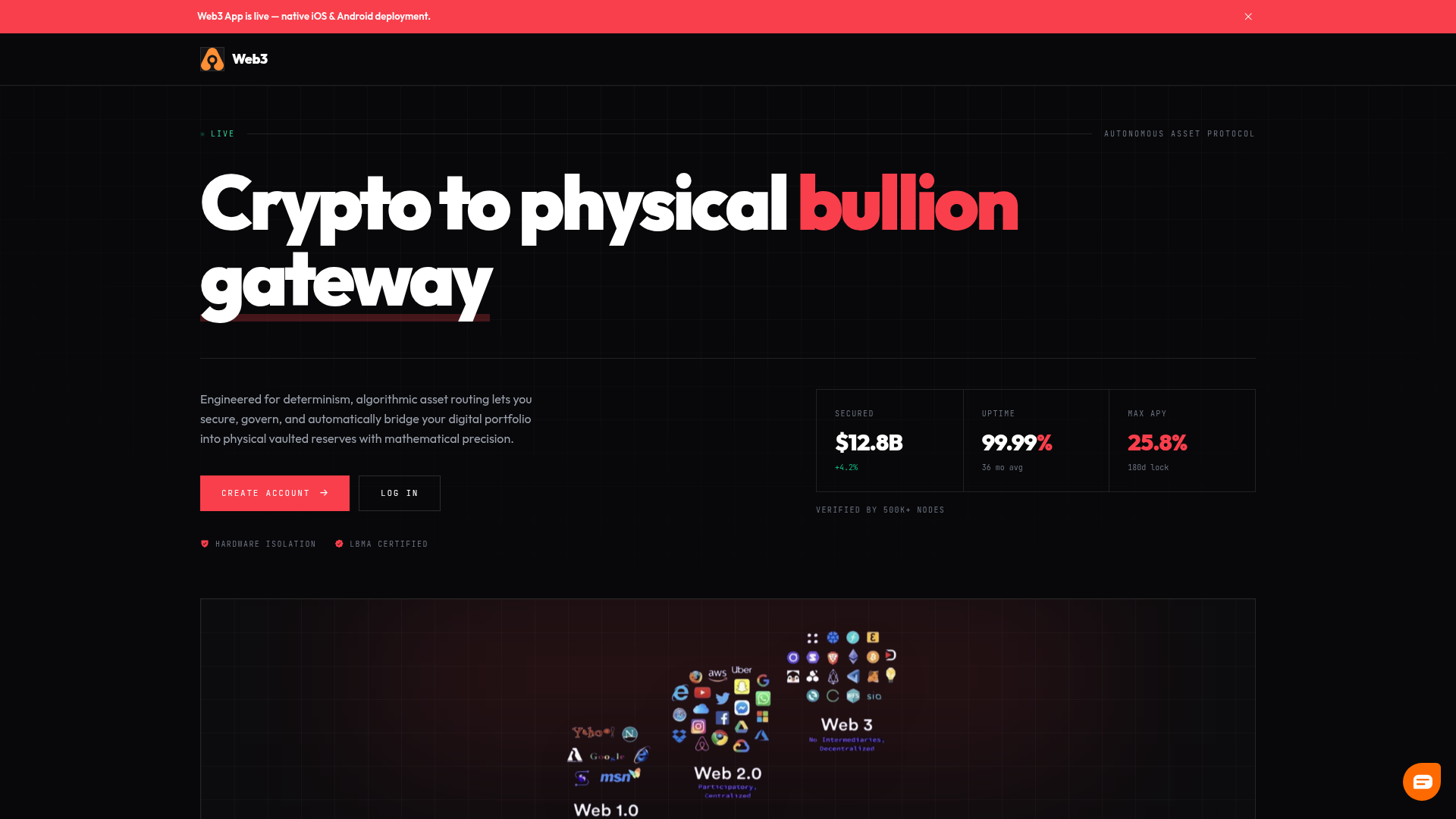
Turning a token balance into physical bullion requires someone to deliver metal or recognise a legal claim to it. On web3trustllc.com, the homepage describes automated routing between digital assets and vaulted reserves. It also displays a maximum annual percentage yield of 25.8% beside a 180-day lock. The page connects these ideas visually. The documents needed to establish the yield and those needed to establish ownership of a bar of metal are quite different. Protocol presentation
Start With the Unit of the Promise
The premium staking option shows a minimum of 1,000 USDT, a 180-day term and a monthly epoch. Its 25.8% figure is labelled APY. It would be a mistake to multiply a 1,000 USDT deposit by 25.8% and promise the resulting 258 USDT to a participant after six months. An annual figure does not by itself set the return on a shorter holding period. Compounding frequency, accrual rules and charges affect the result.
A second option on web3trustllc.com shows a 500 USDT minimum, a ninety-day lock and a weekly epoch at 15.2% APY. The change in epoch is important. A weekly calculation is not necessarily a right to cash out every week. An agreement would need to explain whether credits remain locked, how early exit works and what happens if a conversion to metal is requested while the deposit is still in its term.
The Missing Link Between a Token and a Bar
The public page describes a bullion gateway and uses language about certification and physical reserves. A reader checking those claims should look for the name of the custodian, the vault jurisdiction and the form of ownership. A claim to a specific identified bar differs from an unsecured entitlement measured by weight. Two statements showing the same number of ounces can describe markedly different rights.
For an actual delivery, the unit, purity, minimum redemption quantity, delivery address and insurance charge all matter. If sale for cash is offered instead, the pricing source and spread matter. No independently attributable vault statement, inventory reconciliation or redemption agreement was verified for web3trustllc.com. A logo or statement about hardware security cannot resolve those omissions. It describes a different part of the proposed system.
What the Homepage Counters Measure
Three figures sit together on the public presentation: $12.8 billion secured, 99.99% uptime and a maximum yield. The uptime claim references a thirty-six-month average. A service could measure the availability of its website without measuring the availability of redemptions. An audit of the dollar amount would need a valuation date, asset inventory and a way to exclude double counting between staked tokens and underlying reserves.
The site also describes multi-signature vaults, isolated hardware and automated contracts. Those are implementation claims. To corroborate them, a reader would need the deployed contracts, their controlling keys or governance structure and a security review covering those particular deployments. That evidence would still leave the physical side to verify separately. No wallet connection or transfer was used to test the system.
The Company Information Route
The public About link on web3trustllc.com led to a page presenting sign-in controls in the retrieval. It displayed Web3 Trust LLC branding, email and password fields, and a PIN interface. It did not yield a company extract identifying the members, registered jurisdiction or entity responsible for the advertised physical reserves. The LLC suffix is a starting point for a search only when the legal spelling and jurisdiction are known. About route as retrieved
The registry record dates web3trustllc.com to September 12, 2026. The homepage describes a protocol established in 2021. Those dates can coexist, but the earlier activity would need evidence linking it to the current operator. A three-year uptime claim cannot be independently reproduced from the registration date of this address.
A customer seeking physical delivery from web3trustllc.com would need to know who can issue a release instruction and which party pays for transport and insurance. A statement showing a token balance does little to settle either issue. Keep the specific redemption request, any promised dispatch date and the written reply together. The reporting guide explains how to preserve that correspondence alongside the original receipt and the applicable product terms.
Frequently Asked Questions
Is a Staking Receipt Evidence of Bullion Ownership?
It could record an interest in a staking arrangement. To establish rights to bullion, the receipt or governing contract would need to identify the custodian and the holder’s enforceable claim. Without that bridge, a token balance documents a different asset from allocated metal.
What Should an Existing Customer Preserve?
Keep the accepted lock period, transaction identifier, quoted yield and any redemption request. Where delivery was promised, retain the unit of metal and the delivery terms. These materials make it possible to identify whether a dispute concerns a staking credit, a conversion or a shipment. Reporting guide
Conclusion and Reporting Guidance
The public case for web3trustllc.com is an ambitious description of a digital-to-physical service with identifiable staking terms. Independent proof of reserves, a legal counterparty and enforceable delivery rights remain outstanding. Before funding, ask who must deliver what, where the obligation is recorded and how it can be enforced at maturity. Submit a redacted reserve or redemption document